

Hey there, fellow parents and caregivers! As a supplier of baby carriers, I've spent a ton of time thinking about how these nifty little tools can impact a baby's development. One question that keeps coming up in my conversations with customers is, "Do baby carriers help with a baby's motor development?" Well, let's dig into it and find out!

First off, what exactly is motor development? It's all about a baby's ability to control their body movements. This includes everything from the tiny wiggles of their fingers to the big, coordinated movements when they start crawling and walking. Motor development happens in two main areas: fine motor skills (using small muscles, like those in the hands and fingers) and gross motor skills (using large muscles, like those in the arms, legs, and torso).
Now, let's talk about how baby carriers fit into this picture. When you pop your little one into a baby carrier, you're giving them a whole new perspective on the world. They're up close and personal with you, seeing things from your eye - level, which is super stimulating. But more than that, the position in a baby carrier can actually support their developing muscles.
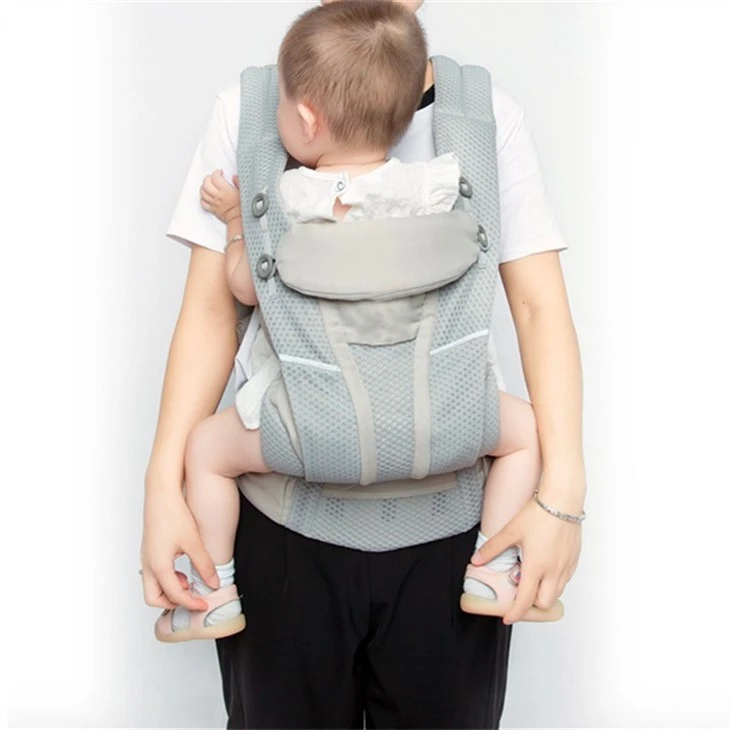
Most baby carriers hold the baby in a position where their hips are flexed and abducted, which means their legs are bent and spread out. This is a really important position for hip development. It helps keep the hip joint stable and can prevent hip problems later on. And as the baby's hips get stronger, it's a building block for other gross - motor skills, like standing and walking.
In a Front and Back Baby Waist Stool, for example, the baby can sit in a natural, ergonomic position. This allows them to use their core muscles to stay upright. They're constantly making small adjustments to their body to balance, which is great for strengthening those core muscles. A strong core is essential for all kinds of movements, from sitting up independently to rolling over.
Let's not forget about the social aspect either. When a baby is in a carrier, they're right there with you, interacting with the world around them. They see how you move, how you use your hands to do things, and they start to imitate those movements. This imitation is a key part of motor development. For instance, they might start to reach out their hands to grab things, just like they see you doing.
Another cool thing about baby carriers is that they give babies a sense of security. When they feel safe and secure, they're more likely to be relaxed and open to exploring. And exploration is a huge part of motor development. They'll start to move their arms and legs more freely, testing out their new - found movement abilities.
But it's not just about gross motor skills. Baby carriers can also have an impact on fine motor skills. When a baby is in a carrier facing outwards, they can see all sorts of interesting things. They might try to reach for objects they see, like a leaf on a tree or a colorful balloon. This reaching motion is an early sign of fine motor development. It helps them learn how to control the movement of their hands and fingers.
Now, let's take a look at some specific types of baby carriers and how they contribute to motor development. The All - Stage Baby Waist Stool is designed to be used at different stages of a baby's growth. In the early months, it can support the baby in a reclined position, which is perfect for newborns who don't have much neck control yet. As the baby gets stronger, they can sit more upright, allowing them to use their neck and back muscles to stay balanced.
The Multi - Functional Baby Waist Stool offers even more versatility. It can be adjusted to different positions, which means you can change how the baby is sitting or lying based on their needs. This flexibility is great for motor development because it allows the baby to gradually progress from one position to another as their muscles get stronger.
Of course, like with anything, there are some things to keep in mind. You don't want to keep the baby in the carrier all the time. Babies also need plenty of time on the floor to explore, roll around, and practice their movements. It's all about finding the right balance.
Also, make sure you're using the baby carrier correctly. An improperly used carrier can actually do more harm than good. It should fit the baby properly, with the right amount of support for their head, neck, and body.
In conclusion, baby carriers can be a fantastic tool for a baby's motor development. They support proper hip and core muscle development, encourage exploration and imitation, and provide a safe and stimulating environment for the baby to grow. If you're a parent or caregiver looking for a way to support your baby's development while keeping them close to you, a baby carrier is definitely worth considering.
If you're interested in our high - quality baby carriers and want to discuss purchasing options, feel free to reach out. We're here to help you find the perfect baby carrier for your little one's needs.
References
- American Academy of Pediatrics. (202X). Guidelines for Infant Motor Development.
- World Health Organization. (202X). Child Growth and Development: Motor Skills.


